I'll keep most of my opinions on ISTEP to myself on here. It's probably not the place. There's was an interesting article in today's Truth though...
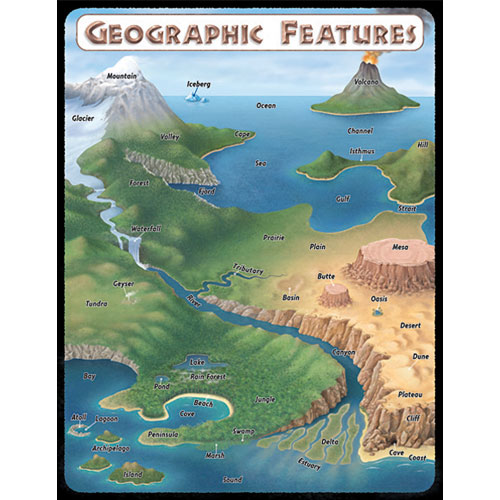
In class we discussed natural barriers and man-made barriers. They had to complete a map for bellwork. We also went over some geographical terms - for instance, the majority of my students didn't know what a plateau is.
When we finished the map, we went over some topics that we studied earlier in the year: human capital, economic spillover, the World Bank, the International Monetary Fund, and Gross Domestic Product.
(Some classes didn't make it through everything.)
Yesterday was a long post, so today I'll post a short one. I'm going to try to put some grades in.
If you want the extra credit, read and discuss the blog with an adult. Adults, maybe you can question my students on some of the topics we've discussed. ??? Sound like a plan?
If you've read and discussed it, write the following quote on a piece of scrap paper: "The opposite of love is indifference." - The Lumineers.
And in case you wanted to see some geography mapped out, here you go:
Tuesday, April 30, 2013
Monday, April 29, 2013
Skatistan and Graduation
As you may have gathered, I wasn't here at school on Friday. I was increasing my human capital by continuing my education. Go me. I graduated with a 4.0 from Indiana Wesleyan University over the weekend. Pictures will be included at the bottom of the post - if you're interested.
Today we studied GDP (gross domestic product). We also graded some of the work from Friday and reviewed some of those topics as well. Most classes watched a video on "Skatistan" a skateboarding program currently going on in Afghanistan. The video is really well done, and I'm including a link here in case parents want to watch it, or if students want to watch it again. It's short. (Ok... at least I think I'm including a video. The site that hosts it - vimeo - is blocked here at school. I already have to mess around with the html when I embed videos from vimeo, now it's doubly difficult since I can't see if it worked or not...)
At any rate, if the video shows up, great. If not, I encourage you to google search "Skatistan Vimeo."
There was quite a bit to discuss after watching this - globalization, war, standard of living, unlimited governments, human rights, etc... but 45 minute classes go fast.
If you want the extra credit for reading and discussing the blog, here's how you can prove you checked it tonight. Tell the adult you're with what "human capital" is. (It's been a while since we've discussed it, but there's a hint in the opening paragraph.) Write down what you think it is, and have them discuss it. If you're in my 7th hour class, I'd like you to watch the video as well, since we didn't watch it in class.
And, here are some pictures from my graduation. Proof that I'm a life-long learner, as they say. You can be one too.
Today we studied GDP (gross domestic product). We also graded some of the work from Friday and reviewed some of those topics as well. Most classes watched a video on "Skatistan" a skateboarding program currently going on in Afghanistan. The video is really well done, and I'm including a link here in case parents want to watch it, or if students want to watch it again. It's short. (Ok... at least I think I'm including a video. The site that hosts it - vimeo - is blocked here at school. I already have to mess around with the html when I embed videos from vimeo, now it's doubly difficult since I can't see if it worked or not...)
At any rate, if the video shows up, great. If not, I encourage you to google search "Skatistan Vimeo."
SKATEISTAN: TO LIVE AND SKATE KABUL from Diesel New Voices on Vimeo.
There was quite a bit to discuss after watching this - globalization, war, standard of living, unlimited governments, human rights, etc... but 45 minute classes go fast.
If you want the extra credit for reading and discussing the blog, here's how you can prove you checked it tonight. Tell the adult you're with what "human capital" is. (It's been a while since we've discussed it, but there's a hint in the opening paragraph.) Write down what you think it is, and have them discuss it. If you're in my 7th hour class, I'd like you to watch the video as well, since we didn't watch it in class.
And, here are some pictures from my graduation. Proof that I'm a life-long learner, as they say. You can be one too.
Thursday, April 25, 2013
Done With the Test
So, we finished going over the test today. I posted some long blogs recently, and I don't want to take up too much time.
Here are some questions a lot of students missed; questions we discussed today.
"Globalization is not a new phenomenon. Give some examples that prove this."
"What is the difference between cultural diffusion and cultural borrowing?"
"What are some indicators of standard of living? Explain them."
"What is the difference between limited and unlimited governments?"
If you want the extra credit for reading and discussing the blog today, discuss those questions with an adult. Then, find a piece of paper and write a short paragraph telling me how the discussion went. Were you able to recall and explain everything? Have the adult sign the paper. Turn it in tomorrow.
Have a great evening. If it's nice, go outside and do something fun.
Here are some questions a lot of students missed; questions we discussed today.
"Globalization is not a new phenomenon. Give some examples that prove this."
"What is the difference between cultural diffusion and cultural borrowing?"
"What are some indicators of standard of living? Explain them."
"What is the difference between limited and unlimited governments?"
If you want the extra credit for reading and discussing the blog today, discuss those questions with an adult. Then, find a piece of paper and write a short paragraph telling me how the discussion went. Were you able to recall and explain everything? Have the adult sign the paper. Turn it in tomorrow.
Have a great evening. If it's nice, go outside and do something fun.
Wednesday, April 24, 2013
Successful Review
We continued reviewing for ISTEP today by going over our last test. Again, most of my students did a good job. Today we focused on the questions a lot students missed.
Before going on, I'd like to explain something - should it come up tonight:
One of the questions a lot of students missed asked was "Which religion could be categorized as monotheistic, polytheistic, or pantheistic?" The answer is Hinduism. It's true they believe in many gods - such as Hanuman, Vishnu, Krishna, Kali, Ganesha, etc... which would make them polytheistic. But they believe those gods make up the God/God Spirit Brahma. This is somewhat similar to the Christian concept of The Trinity - except that there are more than three parts to the Godhead. Either way, because of this Hinduism is sometimes labeled as monotheistic. And since Brahma is part of everything Hinduism is often designated as pantheistic.
I mentioned that this is partially where the idea of karma comes from - that Brahma keeps the universe in balance. Much like the scientific idea of homeostasis. I thought students learned about homeostasis in science this year - but it must be next year. ...ANYWAY, homeostasis is the body's way of keeping itself in balance. For example, if you get too hot - you sweat. If you get too cold, you shiver and get goosebumps. I mentioned that if you try to drink a gallon of milk in an hour, you'll end up throwing up. I had a couple students who were adamant that they either a) could accomplish this, or b) had already accomplished this.
At any rate, I told the kids they could believe what they want, but I was advising them not to try it because 1 - vomit is disgusting, and 2 - it's potentially dangerous.
Ultimately, the point was - like homeostasis, Hindus believe karma keeps the universe in balance.
Students did a great job on the economics section of the test, but most needed to work on the religions section. So, in order to get the points for today's extra credit - discuss 3 questions that were asked during the game today. Write down the questions on a piece of paper. Then have the adult you read the blog with sign the paper.
If you weren't at school today, write something about each one of the 5 religions we've studied this year, and have the adult you read the blog with sign the paper.
Before going on, I'd like to explain something - should it come up tonight:
One of the questions a lot of students missed asked was "Which religion could be categorized as monotheistic, polytheistic, or pantheistic?" The answer is Hinduism. It's true they believe in many gods - such as Hanuman, Vishnu, Krishna, Kali, Ganesha, etc... which would make them polytheistic. But they believe those gods make up the God/God Spirit Brahma. This is somewhat similar to the Christian concept of The Trinity - except that there are more than three parts to the Godhead. Either way, because of this Hinduism is sometimes labeled as monotheistic. And since Brahma is part of everything Hinduism is often designated as pantheistic.
I mentioned that this is partially where the idea of karma comes from - that Brahma keeps the universe in balance. Much like the scientific idea of homeostasis. I thought students learned about homeostasis in science this year - but it must be next year. ...ANYWAY, homeostasis is the body's way of keeping itself in balance. For example, if you get too hot - you sweat. If you get too cold, you shiver and get goosebumps. I mentioned that if you try to drink a gallon of milk in an hour, you'll end up throwing up. I had a couple students who were adamant that they either a) could accomplish this, or b) had already accomplished this.
At any rate, I told the kids they could believe what they want, but I was advising them not to try it because 1 - vomit is disgusting, and 2 - it's potentially dangerous.
Ultimately, the point was - like homeostasis, Hindus believe karma keeps the universe in balance.
Students did a great job on the economics section of the test, but most needed to work on the religions section. So, in order to get the points for today's extra credit - discuss 3 questions that were asked during the game today. Write down the questions on a piece of paper. Then have the adult you read the blog with sign the paper.
If you weren't at school today, write something about each one of the 5 religions we've studied this year, and have the adult you read the blog with sign the paper.
Tuesday, April 23, 2013
Evaluating the Data/ Reteach/Retest
I'm sure you're all aware that the purpose of this blog is to reinforce what we do in class, and to keep parents and guardians up to date with what we're doing.
Occasionally I'll branch out from that, giving you all some insight into some of the other aspects of being a teacher. (A collective groan goes up from the students reading this post... 'BORING!')
This is how the graded test spreadsheets came back to me:
The spreadsheet's actually really, really large - so I'll break it down a little bit. It gives me student names, total points, percentages, etc... If students scored below 70%, their names appear in orange. In general, students did well on the test.
As you can see, it also gives me a breakdown by question. If a student has a "1" that means they got the question right. If you see a "0" that means they got the question wrong.
This is helpful because I can see deficiencies in learning. For instance, in general the students fared well on the continents and oceans portion - even though I haven't really taught that since the beginning of the year:
If you look at the bottom of each column, it tells me the percentage of students who answered the question correctly. Again, it's obvious that students know this section.
However, questions like #15 pose a problem:
Only 52% of my students answered it correctly. It's easy for teachers to say, "well, the student just didn't study enough." And that may be true for some questions - but when the majority of students miss the same question without bombing the test there's a good chance there's more to it than a simple "they didn't study" answer. Perhaps I didn't teach the concept well enough. Perhaps the wording of the question was ambiguous and could be misinterpreted. Was it only one class that missed the question? Was there a day that class missed due to a convocation, delay, etc...
For question #15 the problem was that the question had multiple parts. Students had to locate a physical geographical feature using latitude and longitude. If they didn't know how to use latitude and longitude, they got the question wrong. If they didn't know what a peninsula was, they got the question wrong. Since most of the students could answer the other latitude and longitude questions, I could deduce that they were/are weak on physical geography.
So, we spent the day going over the test. I tried to focus on questions a lot of students missed. I tried to identify why they missed those and address any issues they had.
Tomorrow we're going over the second portion. Wish us all luck. It was a big test. It's a lot of data to review.
If you want extra credit for reading and discussing the blog, find a map of Iraq or Afghanistan online. Write down the names of the countries that border Iraq. Then write the names of the countries that border Afghanistan. Have the adult you read the blog with sign the paper.
Thanks for reading.
Occasionally I'll branch out from that, giving you all some insight into some of the other aspects of being a teacher. (A collective groan goes up from the students reading this post... 'BORING!')
This is how the graded test spreadsheets came back to me:
The spreadsheet's actually really, really large - so I'll break it down a little bit. It gives me student names, total points, percentages, etc... If students scored below 70%, their names appear in orange. In general, students did well on the test.
As you can see, it also gives me a breakdown by question. If a student has a "1" that means they got the question right. If you see a "0" that means they got the question wrong.
This is helpful because I can see deficiencies in learning. For instance, in general the students fared well on the continents and oceans portion - even though I haven't really taught that since the beginning of the year:
If you look at the bottom of each column, it tells me the percentage of students who answered the question correctly. Again, it's obvious that students know this section.
However, questions like #15 pose a problem:
Only 52% of my students answered it correctly. It's easy for teachers to say, "well, the student just didn't study enough." And that may be true for some questions - but when the majority of students miss the same question without bombing the test there's a good chance there's more to it than a simple "they didn't study" answer. Perhaps I didn't teach the concept well enough. Perhaps the wording of the question was ambiguous and could be misinterpreted. Was it only one class that missed the question? Was there a day that class missed due to a convocation, delay, etc...
For question #15 the problem was that the question had multiple parts. Students had to locate a physical geographical feature using latitude and longitude. If they didn't know how to use latitude and longitude, they got the question wrong. If they didn't know what a peninsula was, they got the question wrong. Since most of the students could answer the other latitude and longitude questions, I could deduce that they were/are weak on physical geography.
So, we spent the day going over the test. I tried to focus on questions a lot of students missed. I tried to identify why they missed those and address any issues they had.
Tomorrow we're going over the second portion. Wish us all luck. It was a big test. It's a lot of data to review.
If you want extra credit for reading and discussing the blog, find a map of Iraq or Afghanistan online. Write down the names of the countries that border Iraq. Then write the names of the countries that border Afghanistan. Have the adult you read the blog with sign the paper.
Thanks for reading.
Subscribe to:
Posts (Atom)


