Have you ever been overwhelmed with a job? The task at hand or the issues or problems seem so insurmountable that you feel like giving up before you start. ...Has that ever happened to you?
When you think of how expansive the world is, the number of people alive today, the number of people who have ever lived, the places they've lived and the nuances of their cultures - it can be overwhelming. Where do you begin to study it all?
Today we began by making observations on a paper clip, and then breaking the world into groups of land. Almost all my students could name one continent - which is good. If we break social studies into disciplines, and then focus on one area of those disciplines - we can start to tackle the problem of where to begin.
Like any problem - we have to take it a little bit at a time, not all at once.
If you read and discussed the blog today, you can get extra credit if you challenge the person you read it with to a continents and oceans geography game.
On a scrap piece of paper, tell me who won.
Have the adult sign it.
Turn it in on Monday.

Friday, August 16, 2013

Thursday, August 15, 2013
Vini Vidi Vi Read the Blog
Today consisted mostly of getting to know the students and going over the procedures.
Unfortunately, I spent my entire prep putting grades in the grade book, so I don't have time for a full-blown post.
I did promise my students that they could receive extra credit by reading this blog though.
Parents, I'll be posting every day. Students, you can get 5 extra credit points every night by reading this with an adult.
If you read it tonight, find a scrap of paper and write the phrase: I came, I saw, I read the blog." Then, have the adult you read it with sign the paper.
Turn it in tomorrow.
Unfortunately, I spent my entire prep putting grades in the grade book, so I don't have time for a full-blown post.
I did promise my students that they could receive extra credit by reading this blog though.
Parents, I'll be posting every day. Students, you can get 5 extra credit points every night by reading this with an adult.
If you read it tonight, find a scrap of paper and write the phrase: I came, I saw, I read the blog." Then, have the adult you read it with sign the paper.
Turn it in tomorrow.
Wednesday, August 14, 2013
How Did You Find This Site?
The school has a new web server, so there's currently no link to my blog. ...So I'm not sure how you found it - especially since I didn't hand out my papers on it yet.
Granted, maybe you've been here before... If you're a previous student: welcome. If you're a current student or parent - you must be a genius to have found this site...
We've completed our first day of school. Introductions and procedures in every class.Good times were had by all. Good times were had by most.
I'll explain this blog later. Essentially, you can get extra credit if you read and discuss the blog with an adult - preferably a parent. For instance, if you want extra credit tomorrow, talk to an adult about your first day of school. Tell them how it went. Tell them about your favorite class. Then, find a scrap piece of paper and write down 2 things that happened today. Have the adult sign it.
Turn that scrap of paper in tomorrow in the extra credit tray, and BAM! Extra credit!
Granted, maybe you've been here before... If you're a previous student: welcome. If you're a current student or parent - you must be a genius to have found this site...
We've completed our first day of school. Introductions and procedures in every class.
I'll explain this blog later. Essentially, you can get extra credit if you read and discuss the blog with an adult - preferably a parent. For instance, if you want extra credit tomorrow, talk to an adult about your first day of school. Tell them how it went. Tell them about your favorite class. Then, find a scrap piece of paper and write down 2 things that happened today. Have the adult sign it.
Turn that scrap of paper in tomorrow in the extra credit tray, and BAM! Extra credit!
Wednesday, July 17, 2013
one day in the life of Ivan Denisovich
If anybody's still out there, I'm here too.
I just thought I'd post my latest book club book review to let you all know I still exist.
 One day in the life of Ivan Denisovich by Aleksandr Solzhenitsyn
My rating: 4 of 5 stars
Before you begin reading, click THIS LINK. How many of you know and love THAT sound? ...It's been a while.
At any rate, if they ever turn One day in the life of Ivan Denisovich into mini-series or TV show, I think they should use that format.
Solzhenitsyn captures the depressing and hopeless monotony of prison life quite well - and in doing so, he captures the same about all life in Soviet Russia - and indeed all Totalitarian States.
It's sad, but there are times even here in America, where I feel burdened by a terrible sense of ennui yet find myself saying, "Yeah... well... what a great day it's been after all." I'm not sure if this is reflective of the human condition, or if the burden would be lifted if our government wasn't constantly spying on us.
(Side-note: The one good thing about PRISM and the NSA spying is that I know deep-down that someone, somewhere is reading my goodreads reviews. If only PRISM would click the "like" button...)
The book is rife with Russian platitudes: "It's easy for someone who is warm to say, 'don't mind the cold.'" "Beat a dog once and you only have to show them the whip." Etc...
And you must have skipped out on 10th grade English if you didn't notice some of Shukhov's irony: "Even Shukhov thought it was funny for somebody to go on working like that and not hear the signal to knock off..." (This just after he'd done the same thing...) Or "He was still no scavenger..." (This just after he "rushed back" to the barracks to try to mooch off another prisoner.)
Solzhenitsyn seems to be pointing out that it's human nature to judge others - even when we have the very same flaw. And that in prison (and maybe in a Totalitarian State) it's comforting to say, "It could be worse... I could be like that guy..." I've heard that in North Korea every year is a LOT better than the last.
In the book, a character is criticizing Prokofiev's Ivan the Terrible and he says, "Too much art is no art at all. Like candy instead of bread!"
One day in the life of Ivan Denisovich is bread. Good, wholesome, hearty bread that will sustain you through the day. The kind of bread that you break in half in order to sew half into your mattress, saving it for later. And when you get back to reading it, you think: "Yeah... today's been a good day after all."
View all my reviews
One day in the life of Ivan Denisovich by Aleksandr SolzhenitsynMy rating: 4 of 5 stars
Before you begin reading, click THIS LINK. How many of you know and love THAT sound? ...It's been a while.
At any rate, if they ever turn One day in the life of Ivan Denisovich into mini-series or TV show, I think they should use that format.
Solzhenitsyn captures the depressing and hopeless monotony of prison life quite well - and in doing so, he captures the same about all life in Soviet Russia - and indeed all Totalitarian States.
It's sad, but there are times even here in America, where I feel burdened by a terrible sense of ennui yet find myself saying, "Yeah... well... what a great day it's been after all." I'm not sure if this is reflective of the human condition, or if the burden would be lifted if our government wasn't constantly spying on us.
(Side-note: The one good thing about PRISM and the NSA spying is that I know deep-down that someone, somewhere is reading my goodreads reviews. If only PRISM would click the "like" button...)
The book is rife with Russian platitudes: "It's easy for someone who is warm to say, 'don't mind the cold.'" "Beat a dog once and you only have to show them the whip." Etc...
And you must have skipped out on 10th grade English if you didn't notice some of Shukhov's irony: "Even Shukhov thought it was funny for somebody to go on working like that and not hear the signal to knock off..." (This just after he'd done the same thing...) Or "He was still no scavenger..." (This just after he "rushed back" to the barracks to try to mooch off another prisoner.)
Solzhenitsyn seems to be pointing out that it's human nature to judge others - even when we have the very same flaw. And that in prison (and maybe in a Totalitarian State) it's comforting to say, "It could be worse... I could be like that guy..." I've heard that in North Korea every year is a LOT better than the last.
In the book, a character is criticizing Prokofiev's Ivan the Terrible and he says, "Too much art is no art at all. Like candy instead of bread!"
One day in the life of Ivan Denisovich is bread. Good, wholesome, hearty bread that will sustain you through the day. The kind of bread that you break in half in order to sew half into your mattress, saving it for later. And when you get back to reading it, you think: "Yeah... today's been a good day after all."
View all my reviews
Friday, June 21, 2013
Keeping Up
If you stop by during the summer, leave a comment.
During the summer, this blog becomes mine. I can write about whatever I want - and I may not update it. You've been warned on both counts.
That said, I've been keeping up with my summer goals - one of which is reading. I review every book I read, and post them to goodreads.com
Here's my latest.
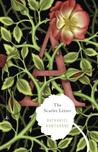 The Scarlet Letter by Nathaniel Hawthorne
My rating: 5 of 5 stars
*Goodreads is weird... since I read this before, my status says: "Began June 13, 2013 - Finished January 1, 2004..."
I guess as soon as I write this review, I will no longer be credited with reading this book in 2004. I was there, though. It happened.*
Book club books are great. If you're not in a club, I suggest you join one - and not some online forum (although those can be good as well) but a real club - where you sit down face-to-face with people you love to disagree with (or be disagreeable with...)
We read The Scarlet Letter just after finishing Philip Roth's book: Sabbath's Theater. These two VERY different books have some very similar themes. In fact, I'd argue that the central message of both is the same thing:
(If you don't want the central message of either of these books, avert your eyes now. I'm serious, you may regret it if you keep reading. Just head down to the bottom and click "like" out of appreciation for this warning...)
The central message is this: We try to hide it, but we're all depraved beings.
In the Philip Roth book, Mickey Sabbath isn't just depraved - he's totally depraved. I don't mean that in any theological sense, it's just... that guy is bad news. But (I believe) the point Roth was making is that we're all that way. We have hidden desires that we don't act on. And while we're in no way envious of Mickey or what he becomes, we are a little jealous that he has the uhhh... ...guts... to live life on his terms - without remorse or guilt.
The Scarlet Letter is the exact opposite of that. Whereas Sabbath's Theater was a book of excess; a book of sexual deviancy - The Scarlet Letter is a Puritanical book. The most heinous act occurring before page one.
This isn't a spoiler, I'm only putting it in here because it's boring: (view spoiler)
Yet the theme is still the same: we are the townspeople. We're judging Hester, thankful we have someone to take the focus off the secrets in our own lives.
Obviously, both books were about much more than that. I'm sure you've already beat this horse to death in 9th or 10th grade English.
The Scarlet Letter's about coming clean. It's about the freedom in the truth, and facing adversity head-on. It's about the differences in gender-roles and punishments. It's about hypocrisy (most blatantly with the good Reverend, but also with the townspeople - from wearing the ornate clothes that Hester herself made to the dirty looks they gave.) (...I know, I know, back-to-back parenthetical asides... May I just add that the scarlet letter - the letter mind you, not the book - served as a nice advertisement for Hester's abilities...)
Reading it now, I also see why it's a staple of high school classrooms. It contains all kinds of literary devices: irony, metaphor, simile, symbolism, etc... I mean, Pearl? It's a challenging read, but not overly-so.
If you weren't forced into reading this during your teenage years, consider picking it up.
Or, if you were forced and didn't like it - consider giving it another shot. (Although, I'd skip the intro... apparently it's not worth it.)
View all my reviews
During the summer, this blog becomes mine. I can write about whatever I want - and I may not update it. You've been warned on both counts.
That said, I've been keeping up with my summer goals - one of which is reading. I review every book I read, and post them to goodreads.com
Here's my latest.
The Scarlet Letter by Nathaniel HawthorneMy rating: 5 of 5 stars
*Goodreads is weird... since I read this before, my status says: "Began June 13, 2013 - Finished January 1, 2004..."
I guess as soon as I write this review, I will no longer be credited with reading this book in 2004. I was there, though. It happened.*
Book club books are great. If you're not in a club, I suggest you join one - and not some online forum (although those can be good as well) but a real club - where you sit down face-to-face with people you love to disagree with (or be disagreeable with...)
We read The Scarlet Letter just after finishing Philip Roth's book: Sabbath's Theater. These two VERY different books have some very similar themes. In fact, I'd argue that the central message of both is the same thing:
(If you don't want the central message of either of these books, avert your eyes now. I'm serious, you may regret it if you keep reading. Just head down to the bottom and click "like" out of appreciation for this warning...)
The central message is this: We try to hide it, but we're all depraved beings.
In the Philip Roth book, Mickey Sabbath isn't just depraved - he's totally depraved. I don't mean that in any theological sense, it's just... that guy is bad news. But (I believe) the point Roth was making is that we're all that way. We have hidden desires that we don't act on. And while we're in no way envious of Mickey or what he becomes, we are a little jealous that he has the uhhh... ...guts... to live life on his terms - without remorse or guilt.
The Scarlet Letter is the exact opposite of that. Whereas Sabbath's Theater was a book of excess; a book of sexual deviancy - The Scarlet Letter is a Puritanical book. The most heinous act occurring before page one.
This isn't a spoiler, I'm only putting it in here because it's boring: (view spoiler)
Yet the theme is still the same: we are the townspeople. We're judging Hester, thankful we have someone to take the focus off the secrets in our own lives.
Obviously, both books were about much more than that. I'm sure you've already beat this horse to death in 9th or 10th grade English.
The Scarlet Letter's about coming clean. It's about the freedom in the truth, and facing adversity head-on. It's about the differences in gender-roles and punishments. It's about hypocrisy (most blatantly with the good Reverend, but also with the townspeople - from wearing the ornate clothes that Hester herself made to the dirty looks they gave.) (...I know, I know, back-to-back parenthetical asides... May I just add that the scarlet letter - the letter mind you, not the book - served as a nice advertisement for Hester's abilities...)
Reading it now, I also see why it's a staple of high school classrooms. It contains all kinds of literary devices: irony, metaphor, simile, symbolism, etc... I mean, Pearl? It's a challenging read, but not overly-so.
If you weren't forced into reading this during your teenage years, consider picking it up.
Or, if you were forced and didn't like it - consider giving it another shot. (Although, I'd skip the intro... apparently it's not worth it.)
View all my reviews
Subscribe to:
Posts (Atom)