Yesterday I asked my students if they had heard of World War I before. Almost universally, students told me that they had.
I asked them to tell me about it. Anything. Who was it fought between, why it was fought, when, major battles, sides, places... anything.
I think 2 students out of 150 or so could list a single accurate aspect of this, The "Great" War.
So, here's what happened:
I asked students if they knew the term, "I got your back" means. Yes, of course they did. They even taught me some new, hip ways of saying it. I won't repeat them here, because I prefer to use terms like, "hip."
They went around the classroom building alliances:
Then I offered something small: a candy bar. I offered it to a petite lady in the class. It was hers, but if somebody could beat her in arm-wrestling, they could have it.
I then chose the strongest looking guy with his hand up.
Obviously, that wasn't fair - so she called up member of her alliance. Maybe all of them.
Then, the guy didn't think that was fair, so he called up all the members of HIS alliance.
Then alliance members called other people they were allied with, until the whole classroom was up at the front fighting over something very few actually cared about, or were invested in.
We discussed how the catalyst for WWI was something relatively small - Gavrilo Princip assassinating Franz Ferdinand. (Of course, assassinations are a big deal, but ultimately millions and millions of people ended up dying in WWI.) Then, the system of alliances took off - and that's where we got the war.
Today, we've already moved into WWII. You can check out things I've posted about it HERE, or HERE.
If you want extra credit for reading and discussing the blog, write two paragraphs about the discussion you had. Have the adult you read with sign the paper. Turn it in tomorrow. (Make sure your name is on it.)
Showing posts with label colonization. Show all posts
Tuesday, April 19, 2016
Monday, March 7, 2016
Empire (British and Others)
Last week and this week, we've been studying exploration and colonization. Today, the students completed a map of the British Empire. Check it out:
...It was pretty vast.
The 7th grade social studies department teaches several reasons for European exploration and colonization during the so-called "Age of Exploration" or "Age of Discovery."
What I teach as the biggest and most important reasons are LAND, and NATURAL RESOURCES.
It's true, there were many other reasons - noble reasons - for exploring the world. (Gaining knowledge, for one...) But the main reasons Europe explored (and colonized) was for land and natural resources.
I'm not really in to casting stones, but let me point out one other thing: The British Empire helped pave the way for others with Imperialistic aims.
...It was pretty vast.
The 7th grade social studies department teaches several reasons for European exploration and colonization during the so-called "Age of Exploration" or "Age of Discovery."
What I teach as the biggest and most important reasons are LAND, and NATURAL RESOURCES.
It's true, there were many other reasons - noble reasons - for exploring the world. (Gaining knowledge, for one...) But the main reasons Europe explored (and colonized) was for land and natural resources.
I'm not really in to casting stones, but let me point out one other thing: The British Empire helped pave the way for others with Imperialistic aims.
England lost moral credibility against Germany in World War II because of its history of imperialism. I believe it's becoming clearer and clearer that they were both evil.
If you want extra credit for reading and discussing the blog, you are supposed to read and discuss it with an adult. Discuss the British Empire: how much land they had, whether you believe it was okay for them to colonize the world - why or why not, etc... To prove that you were here, click on the link above, "Age of Discovery" and TKWA any map from that page. Have the adult you read and discussed the blog with sign the paper when you are done.
Make sure your name, date, and hour are on it, and turn it in tomorrow.
EXTRA: Here's a video many classes watched today:
Wednesday, February 18, 2015
ALIENS!!! (and colonization, Japanese Imperialism, and possibly some elephants...)
Today students walked in and completed a couple maps on Japanese Imperialism. For some reason, American culture is so hung up on Germany, and Hitler's invasion of Poland in World War II, that we skimp over the ambitions of the Japanese. Japan invaded Manchuria in 1931. Germany invaded Poland in 1939... Wouldn't that make 1931 the true start of WWII?
So, Japan invaded Manchuria for it's land and natural resources. (These are pretty much the same reasons all empires are built. There are others as well, but lets roll with that for now.)
We graded the maps, and watched this video:
So, Japan invaded Manchuria for it's land and natural resources. (These are pretty much the same reasons all empires are built. There are others as well, but lets roll with that for now.)
We graded the maps, and watched this video:
It got me thinking though, (and it's true I've thought of this before...) isn't this the theme of every alien invasion movie ever? I mean, H.G. Wells was British. In my mind, much like Orwell, he wasn't thrilled about British Imperialism. His book, War of the Worlds, written in 1898 is often cited as being a story about British colonization.
So, we watched this trailer:
Right around 1:05, we hear the speaker say, "When you invade a place for its resources, you wipe out its indigenous population. Right now we are being colonized."
To get the extra credit today, you should read and discuss the blog with an adult. Instead of writing me a note to prove that you were here, I'm asking you to post a link to a different alien movie where the aliens are invading to take over our land and our natural resources. (Preferably one that includes aliens with superior technology... ...Has Hollywood put out a movie where the aliens have inferior technology?)
Post the link in the comments section of the blog. You only have to post once. Also, write a sentence or two explaining how it ties in with what we're studying in class. If it doesn't show up, it's because I moderate the comments on the blog, and I have to preview it first. Make sure you identify yourself somehow. Either put your first name and hour, or your initials... Something.
Parents/adults: you can help them think of movies if they can't think of any on their own.
Good luck.
Stay warm.
Monday, February 16, 2015
Hand of God and Shooting an Elephant
I nearly didn't post the extra credit today, because of lack of time... but here's a short post anyway...
If you weren't in class today, I asked students to write me a one-page summary of Orwell's "Shooting an Elephant." After they did that, they were to tell me the main point of the story. If you did not do this, do it now.
Turn it in whenever you get back.
Here are two hints: "One day something happened which in a roundabout way was enlightening. It was a tiny incident in itself, but it gave me a better glimpse than I had had before of the real nature of imperialism - the real motives for which despotic governments act."
The second hint: "I perceived in this moment that when the white man turns tyrant, it is his own freedom he destroys."
Several classes also got to watch the "Hand of God" goal, scored by Diego Maradona in 1986. Keeping in mind that "Shooting an Elephant" was written in 1936, read the following lines, "When a nimble Burman tripped me up on the football field and the referee (another Burman) looked the other way, the crowd yelled with hideous laughter. This happened more than once."
Now, if you haven't seen it before, watch the goal:
A couple things to consider:
If you weren't in class today, I asked students to write me a one-page summary of Orwell's "Shooting an Elephant." After they did that, they were to tell me the main point of the story. If you did not do this, do it now.
Turn it in whenever you get back.
Here are two hints: "One day something happened which in a roundabout way was enlightening. It was a tiny incident in itself, but it gave me a better glimpse than I had had before of the real nature of imperialism - the real motives for which despotic governments act."
The second hint: "I perceived in this moment that when the white man turns tyrant, it is his own freedom he destroys."
Several classes also got to watch the "Hand of God" goal, scored by Diego Maradona in 1986. Keeping in mind that "Shooting an Elephant" was written in 1936, read the following lines, "When a nimble Burman tripped me up on the football field and the referee (another Burman) looked the other way, the crowd yelled with hideous laughter. This happened more than once."
Now, if you haven't seen it before, watch the goal:
A couple things to consider:
- This game was played in 1986.
- It was played between Argentina and England
- The Falklands War was in 1982
- The British won the war against Argentina, maintaining control of the islands
- The 1986 World Cup was played in Mexico
- If you missed it, Maradona scored that goal with his hand, and didn't get called for it
My hat's off to those of you who can put the pieces of this puzzle together. Spoiler alert: the feelings toward British Imperialism started well before Orwell's "Shooting an Elephant," and lasted well after its publication.
In order to get the extra credit for reading and discussing the blog with an adult today, write two sentences from your discussion. Have the adult you read it with sign on the paper you wrote your sentences.
As always, thanks for reading.
Tuesday, February 10, 2015
Flags and Culture
The colonization simulation is full of symbolism. The play-doh represents natural resources. Changing styles of dress represent the different styles of dress in various cultures. The chant/cheer/song can represent the arts, or customs, maybe even religion...
But what does the flag represent?
The American Flag - although a good-looking, and artistic piece of cloth, does not represent American cultural arts. Rather it symbolizes everything we stand for as Americans. It represents our government, and (I would suggest) more importantly, our values. It represents our culture as a whole.
When students made symbolic flags for their continents, they were supposed to keep this in mind. And when those flags were destroyed, it was to represent that in all areas, their culture was gone, and replaced by another.
To hammer the point home, we watched John McCain tell a story of his days as a Prisoner of War. You can watch the video here:
Most classes also played the listing game. We used natural resources as our topic. If you want the extra credit today, you have to do two things. First, rewatch and discuss the video. Write a couple sentences telling about your discussion.
Second, you have to challenge the adult you read the blog with to the listing game. The topic is, of course, natural resources. Write a sentence telling me who won.
When you're done, have the adult you read and discussed with sign the paper.
Turn it in tomorrow.
But what does the flag represent?
The American Flag - although a good-looking, and artistic piece of cloth, does not represent American cultural arts. Rather it symbolizes everything we stand for as Americans. It represents our government, and (I would suggest) more importantly, our values. It represents our culture as a whole.
When students made symbolic flags for their continents, they were supposed to keep this in mind. And when those flags were destroyed, it was to represent that in all areas, their culture was gone, and replaced by another.
To hammer the point home, we watched John McCain tell a story of his days as a Prisoner of War. You can watch the video here:
Most classes also played the listing game. We used natural resources as our topic. If you want the extra credit today, you have to do two things. First, rewatch and discuss the video. Write a couple sentences telling about your discussion.
Second, you have to challenge the adult you read the blog with to the listing game. The topic is, of course, natural resources. Write a sentence telling me who won.
When you're done, have the adult you read and discussed with sign the paper.
Turn it in tomorrow.
Friday, February 6, 2015
Colonization Simulation 2015
Yesterday my classes worked on developing indigenous cultures on the continents I placed them. You see, I split my room up into 4 sections; each section represented a continent. Three of the continents were large, spacious, and had untold natural resources.
The fourth was smaller, but no less proud.
Groups were tasked with developing flags, chants and songs, changing their style of dress, and coming up with other ways that could symbolize their particular cultures.
It was a fun day, yesterday.
Then came today: exploration, conquest, colonization, disease, defeat and shame.
The small continent with few natural resources had the opportunity to explore the other continents. The people of the other continents decided whether they wanted to fight, or work with those who were invading their land.
If you're reading this at home, discuss what happened, and what it symbolized.
If you weren't at school today, tell what you think happened. When you come back, find out if you were right or not.
When you're done discussing it, write a few sentences about your discussion, and have the adult you read the blog with sign the paper.
Here are some pictures:
First, a map of the world:
The fourth was smaller, but no less proud.
Groups were tasked with developing flags, chants and songs, changing their style of dress, and coming up with other ways that could symbolize their particular cultures.
It was a fun day, yesterday.
Then came today: exploration, conquest, colonization, disease, defeat and shame.
The small continent with few natural resources had the opportunity to explore the other continents. The people of the other continents decided whether they wanted to fight, or work with those who were invading their land.
If you're reading this at home, discuss what happened, and what it symbolized.
If you weren't at school today, tell what you think happened. When you come back, find out if you were right or not.
When you're done discussing it, write a few sentences about your discussion, and have the adult you read the blog with sign the paper.
Here are some pictures:
First, a map of the world:
This next one is a close up of Saia.
I call this one "Negotiations."
And perhaps my favorite, "To the victor go the spoils."
Thursday, March 6, 2014
Colonization Simulation
Today was a good day. Stressful, but one of the best. We started working on the colonization simulation. The desks are cleared out of my room.and students worked on creating their own culture. They were divided up into continents, and then within those continents, they formed smaller groups - symbolizing the fact that even though they were all part of the same continent, there's great diversity found within.
I don't want to give away what it all means, but here are some pictures from the day:
If you want extra credit for reading about, and discussing the blog with an adult... make sure you've read and discussed it. Tell the adult what your flag looks like. Tell them some of the natural resources your continent has. Tell them the chant you came up with, and why.
When you're done, write two sentences from your discussion. Also, tell me which of the pictures is your favorite, and why. Then, have the adult you read and discussed the blog with sign the paper.
See you tomorrow.
Wednesday, March 5, 2014
Tearing It Up
We're into exploration and colonization.
If you weren't in class today, click on this link to get the bellwork.
Then, use the map below to complete it.
So, we spent some time with the bellwork. Most classes came up with a list of natural resources after they found out that was a big part of the answer for number 3. (That's a huge hint for those of you who were missing yesterday.)
Students turned in their British Empire Maps, which they had completed for homework.
Then we spent the rest of the time going over their graded bellwork from Monday. Most of their grades ranged from 0-3 out of 16. So, once I went over why they missed the questions, I'm giving them a chance to make it up. Well, that's not accurate. They have to correct their mistakes for homework.
If you weren't here today, make sure you get your original copy from me, along with the new version.
In some classes we also talked a little bit about how War of the Worlds is a story about colonization. (Or at least, that's one major interpretation of the book...)
I thought I'd add the movie trailer, just for fun... you know?
If you weren't here today (3/5/14), you have to print out, and complete the bellwork to get your points. If you were here, you should read and discuss the blog with an adult to get the points. Consider watching the trailer and talking about how it deals with colonization.
When you're done, find a scrap of paper, and write two thoughts from your conversation. Have the adult you discussed it with sign the paper.
If you weren't in class today, click on this link to get the bellwork.
Then, use the map below to complete it.
So, we spent some time with the bellwork. Most classes came up with a list of natural resources after they found out that was a big part of the answer for number 3. (That's a huge hint for those of you who were missing yesterday.)
Students turned in their British Empire Maps, which they had completed for homework.
Then we spent the rest of the time going over their graded bellwork from Monday. Most of their grades ranged from 0-3 out of 16. So, once I went over why they missed the questions, I'm giving them a chance to make it up. Well, that's not accurate. They have to correct their mistakes for homework.
If you weren't here today, make sure you get your original copy from me, along with the new version.
In some classes we also talked a little bit about how War of the Worlds is a story about colonization. (Or at least, that's one major interpretation of the book...)
I thought I'd add the movie trailer, just for fun... you know?
If you weren't here today (3/5/14), you have to print out, and complete the bellwork to get your points. If you were here, you should read and discuss the blog with an adult to get the points. Consider watching the trailer and talking about how it deals with colonization.
When you're done, find a scrap of paper, and write two thoughts from your conversation. Have the adult you discussed it with sign the paper.
Monday, April 15, 2013
Carrying On
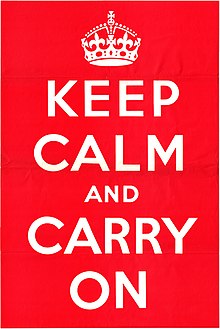
Well, here in class we're on to World War II. We're focusing on Japanese Imperialism, but the Queen's poster showed up during the Crash Course video:
I can't imagine how difficult it was for the British, but I'm glad they didn't panic.
We spent quite a bit of time working on the bellwork. You can get a copy of it HERE. It's called Japan Invades Manchuria.
As a class, we didn't go into great detail about the horrors of the Japanese invasion - and it was horrific. I did point out that the stemmed from a demand of natural resources.
If you weren't here today, you should probably watch these two videos:
and this one - your favorite.
If you want the extra credit, read and discuss the blog. If you weren't here today and you want the extra credit, you need to do the bellwork. If you were here, you should discuss today's entry with an adult. If you've done that, write two sentences from the discussion.
Either way, when you're finished turn the paper in tomorrow. Put it in the extra credit tray.
DON'T FORGET! WE HAVE A MAJOR TEST COMING UP ON WEDNESDAY!
I can't imagine how difficult it was for the British, but I'm glad they didn't panic.
We spent quite a bit of time working on the bellwork. You can get a copy of it HERE. It's called Japan Invades Manchuria.
As a class, we didn't go into great detail about the horrors of the Japanese invasion - and it was horrific. I did point out that the stemmed from a demand of natural resources.
If you weren't here today, you should probably watch these two videos:
and this one - your favorite.
If you want the extra credit, read and discuss the blog. If you weren't here today and you want the extra credit, you need to do the bellwork. If you were here, you should discuss today's entry with an adult. If you've done that, write two sentences from the discussion.
Either way, when you're finished turn the paper in tomorrow. Put it in the extra credit tray.
DON'T FORGET! WE HAVE A MAJOR TEST COMING UP ON WEDNESDAY!
Saturday, February 23, 2013
Colonization Simulation Breakdown
If you were absent Friday, instructions are at the bottom.
Sorry I didn't post this earlier, I know some of you like to check it right away - especially if you were absent and need to download the homework... I had a meeting during prep, then I played a minor role in a movie (don't worry, you'll probably get to see it and make fun of me...) Then, I went to the High School to get tickets for sectionals - the athletic office closed at 3:30, and Friday was the last day to order tickets. I'm sure those of us who missed the game are all bummed we missed it last night. Another reason I didn't post this until now was because I was watching and rewatching this clip from WNDU:
Yeah. There you go. Fantastic.
How can you go from that to social studies? Good question.
We started to debrief the colonization simulation. We'll finish up on Monday. Because of the two hour delay, the we didn't have as much time in class, so the students all had homework. To get the extra credit for reading the blog tonight, discuss that (completed) homework with whoever it is you read the blog with.
Have them sign the homework. Turn it in on Monday, but make sure that the signature is prominent, so that I'll definitely see it when I'm grading those things.
Also, the key here is that you discuss it. So, make sure that happens. I trust you guys.
*But what about 6th hour, Mr. Habecker? What about us? We finished it in class... (sad face)*
6th hour, you can discuss it, find a scrap piece of paper lying around the house, and have the adult you read the blog with sign it, stating you did discuss the homework that you turned in Friday. If I find out Monday you conned your parents, and you didn't actually turn in the homework, you won't get credit for the extra credit either.
And if you were absent, you can download the homework here: BLOCK H RESOURCES and download the "colonization break down."
Sorry I didn't post this earlier, I know some of you like to check it right away - especially if you were absent and need to download the homework... I had a meeting during prep, then I played a minor role in a movie (don't worry, you'll probably get to see it and make fun of me...) Then, I went to the High School to get tickets for sectionals - the athletic office closed at 3:30, and Friday was the last day to order tickets. I'm sure those of us who missed the game are all bummed we missed it last night. Another reason I didn't post this until now was because I was watching and rewatching this clip from WNDU:
Yeah. There you go. Fantastic.
How can you go from that to social studies? Good question.
We started to debrief the colonization simulation. We'll finish up on Monday. Because of the two hour delay, the we didn't have as much time in class, so the students all had homework. To get the extra credit for reading the blog tonight, discuss that (completed) homework with whoever it is you read the blog with.
Have them sign the homework. Turn it in on Monday, but make sure that the signature is prominent, so that I'll definitely see it when I'm grading those things.
Also, the key here is that you discuss it. So, make sure that happens. I trust you guys.
*But what about 6th hour, Mr. Habecker? What about us? We finished it in class... (sad face)*
6th hour, you can discuss it, find a scrap piece of paper lying around the house, and have the adult you read the blog with sign it, stating you did discuss the homework that you turned in Friday. If I find out Monday you conned your parents, and you didn't actually turn in the homework, you won't get credit for the extra credit either.
And if you were absent, you can download the homework here: BLOCK H RESOURCES and download the "colonization break down."
Thursday, February 21, 2013
To Have Lost More Than the Red Earth of Tara
My students lost a lot today when their land was colonized. A lot.
We started the class by showing off the cultures that were developed yesterday. Many students took pride in their work. The flags they had created. The chants and songs. Many were proud of the fact that their continent had more natural resources (yes it was only Play-Doh™) but it apparently mattered quite a bit.
Then they found out another group was coming, and they were going to try to take over the land. Each continent; each culture had to make a choice: do we do what they say? Do we submit? Or do we fight? Most fought. Especially at the beginning.
As a teacher, I have some fun with this. I tell the students that we can't fight in school - obviously. So one group will tickle the other group so no one gets hurt. The small continent (who already knows the game is rigged) doesn't yet realize how it's going to play out. I count down from 3, but then stop it before anybody has a chance to move. And all who fought against the colonizers lose. They don't really take this well.
There is a lot of symbolism in this simulation. We'll talk about it tomorrow. I'm posting some pictures. The explanation for how to earn your extra credit will come after them.
To get the extra credit, you should have read and discussed this post with an adult. I want you to tell them what happened in your class. Which group were you in? How did you feel about what happened? Did you like the activity? What do you think everything symbolized?
When you're done discussing this, find a piece of scrap paper, and write 3 good sentences about the discussion you just had. Tell me what your parents (or whatever adult you discussed this with) thinks about the simulation. Maybe you could ask them if they did this in their 7th grade social studies class.
Have them sign the paper. Turn it in tomorrow for extra credit.
Wednesday, February 20, 2013
Simulation
I don't want to give too much away, so this won't be a long post. We just started a simulation today. The students were blocked into continents, and they had to develop their own culture. It was a nice review, because we haven't talked about cultures since the beginning of the year. They made a flag, a chant, and altered their style of dress. They also had Play-Doh™ which represented the natural resources of their continent.
To get the extra credit today, read and discuss the blog. Tell your parent (or whatever adult you're reading this with) what you did today. Tell them what your flag looks like. Tell them about your chant. Tell them whether or not your group will be ready to go right away tomorrow. (You should be...)
Then when you've finished discussing the blog, write the following sentence on a piece of scrap paper: "I was listening to Five Iron Frenzy while writing this blog. On Distant Shores."
Here are some pictures from first and second hour - if you're so inclined:
Tuesday, February 19, 2013
The Burmese Elephant
To those of you who didn't complete the homework, make sure you read the post from 2-14-13. You can find it HERE.
Social studies often overlaps with language arts. Spending 2 days on "Shooting an Elephant" is evidence of that. And today's discussion really overlapped.
"Shooting an Elephant" is highly symbolic. Orwell represents the British. The elephant represents the Burmese culture.
When Orwell first went to Burma, he thought he was doing the right thing. He was serving The Empire. He didn't realize that the toll he was taking on the Burmese people is the same toll that was magnified all over the world as technology allowed globalization to expand at previously unseen rates.
Here are some topics we discussed in class, with a few others thrown in to boot:
Social studies often overlaps with language arts. Spending 2 days on "Shooting an Elephant" is evidence of that. And today's discussion really overlapped.
"Shooting an Elephant" is highly symbolic. Orwell represents the British. The elephant represents the Burmese culture.
When Orwell first went to Burma, he thought he was doing the right thing. He was serving The Empire. He didn't realize that the toll he was taking on the Burmese people is the same toll that was magnified all over the world as technology allowed globalization to expand at previously unseen rates.
Here are some topics we discussed in class, with a few others thrown in to boot:
- How is imperialism a form of globalization?
- What are some examples of ethnocentrism found in the essay?
- What is symbolism? What was symbolic in the story?
- Did Orwell REALLY have to shoot the elephant? What makes you come to that conclusion?
- How do you think the elephant's owner felt? Why couldn't he do anything about the situation? What does that say about the rights of certain groups of people in the empire?
- Have you ever been faced with a situation where you've been pressured into doing something you knew was wrong? How did that make you feel?
- Compare what happened to the Burmese in the essay to the Banananovians.
Thursday, February 14, 2013
Shooting An Elephant
To those of you reading this blog for the first time: welcome. I don't often force this blog upon unsuspecting parents and adults, but today, I thought it'd be worth it.
I post (almost) every school day. My students can get extra credit by reading and discussing the blog with an adult. It's quick. It's easy. It lets parents know what we're doing in class. It reinforces what we've learned.
Today, however it's not for extra credit - it's homework. I assigned it because I wanted to make sure you knew we offered it, and that you could always find out what we're studying. (And your kid could be getting a 124% in my class...)
We're studying colonization, and imperialism. Today we read George Orwell's "Shooting an Elephant." You can read it for free HERE if you want.
Even if you don't read it, discuss it with whoever was in my class today. Ask them what the story was about. Why was Orwell conflicted about his job? What happened to the elephant? What is imperialism? What does this have to do with bullies? Did Orwell have any other options at the end? Or did he do what he had to do?
When you're done discussing it, have the student find a scrap piece of paper. Write the following quote on the paper: "When a person becomes a bully, they take away their own freedom."
Students: once you wrote that on a piece of paper, have the adult you read and discussed the blog with sign it.
Have a great weekend.
I post (almost) every school day. My students can get extra credit by reading and discussing the blog with an adult. It's quick. It's easy. It lets parents know what we're doing in class. It reinforces what we've learned.
Today, however it's not for extra credit - it's homework. I assigned it because I wanted to make sure you knew we offered it, and that you could always find out what we're studying. (And your kid could be getting a 124% in my class...)
We're studying colonization, and imperialism. Today we read George Orwell's "Shooting an Elephant." You can read it for free HERE if you want.
Even if you don't read it, discuss it with whoever was in my class today. Ask them what the story was about. Why was Orwell conflicted about his job? What happened to the elephant? What is imperialism? What does this have to do with bullies? Did Orwell have any other options at the end? Or did he do what he had to do?
When you're done discussing it, have the student find a scrap piece of paper. Write the following quote on the paper: "When a person becomes a bully, they take away their own freedom."
Students: once you wrote that on a piece of paper, have the adult you read and discussed the blog with sign it.
Have a great weekend.
Friday, February 8, 2013
Fifty Nifty
We started talking about colonization. Every year, every year this happens: I ask students if they've heard the word "colonization" before.
"What about 'colony?'" I ask. I point to the flag: "The stripes. The stripes stand for the 13 original-" and before I can finish saying it, one, several, or all students burst into song.
"13 ORIGINAL COLONIES 50 NIFTY STARS ON THE FLAG..." (Yes, that's in all caps because they shout out the lyrics full force.)
So, I'd like to take a moment to thank Mrs. Gillam over at Concord Intermediate School for teaching it to my students: Thank you, Mrs. Gillam. :)
(To all the parents/adults who are reading this, at this point you should ask your kid how much of the song they remember.)
It's nice that they have some background with the idea of colonization. This year we delve into it a little bit farther.
We'll start with why explorers explore the world, and then move from there into colonizing for natural resources, and into imperialism.
Students, make sure you bring the "Why Explorers Explored" paper when you come to class on Monday. Please. Please, don't forget it.
You're probably reading this because you want extra credit in my class. If that's the case, make sure you read and discussed it with an adult. To get the extra credit, find a scrap piece of paper and tell me whether you remember the song - and tell me if you sang it for the person you read the blog with. Then, have that person (preferably an adult) sign the paper.
See you Monday.
And here you go, this is the closest I've been to hearing it the whole way through:
"What about 'colony?'" I ask. I point to the flag: "The stripes. The stripes stand for the 13 original-" and before I can finish saying it, one, several, or all students burst into song.
"13 ORIGINAL COLONIES 50 NIFTY STARS ON THE FLAG..." (Yes, that's in all caps because they shout out the lyrics full force.)
So, I'd like to take a moment to thank Mrs. Gillam over at Concord Intermediate School for teaching it to my students: Thank you, Mrs. Gillam. :)
(To all the parents/adults who are reading this, at this point you should ask your kid how much of the song they remember.)
It's nice that they have some background with the idea of colonization. This year we delve into it a little bit farther.
We'll start with why explorers explore the world, and then move from there into colonizing for natural resources, and into imperialism.
Students, make sure you bring the "Why Explorers Explored" paper when you come to class on Monday. Please. Please, don't forget it.
You're probably reading this because you want extra credit in my class. If that's the case, make sure you read and discussed it with an adult. To get the extra credit, find a scrap piece of paper and tell me whether you remember the song - and tell me if you sang it for the person you read the blog with. Then, have that person (preferably an adult) sign the paper.
See you Monday.
And here you go, this is the closest I've been to hearing it the whole way through:
Wednesday, February 8, 2012
Colonization Simulation
Today we did one of my favorite activities of the year, the Colonization Simulation. I wish I was allowed to post pictures of students on here. Most of them really got into it.
The room was covered in blue butcher paper, with spaces of carpet representing the continents. Students take time developing their own cultures. They're supposed to make a chant/cheer, design a flag, and alter their style of dress somehow - cuffing their pants or rolling up their sleeve...
Then, the smallest of the continents sails across the sea and tries to colonize the others. If they succeed, they tear up the flag, and force the people to dress the way they dress. They always succeed. (At least in the simulation... I guess we're having another Great Britain/Falklands flare-up...)
We're going to debrief the activity at length tomorrow. There may be a little bit of homework as well. (Shock and sadness from all students involved.)
In order to get the extra credit for reading this, students must discuss this blog with a parent or adult that lives in their home. Students, tell your parents about the activity. What continent were you on? What continent do you think it represented? What did your flag look like? What happened to it?
After you've discussed the blog and the questions in bold above, write the following quote and sentence on a scrap of paper. "'What were the political ramifications of the 1986 quarter-final World Cup game?' I read and discussed the blog with ___________________________." Then have the parent/adult from your home that you discussed it with sign the scrap paper on the line.
The room was covered in blue butcher paper, with spaces of carpet representing the continents. Students take time developing their own cultures. They're supposed to make a chant/cheer, design a flag, and alter their style of dress somehow - cuffing their pants or rolling up their sleeve...
Then, the smallest of the continents sails across the sea and tries to colonize the others. If they succeed, they tear up the flag, and force the people to dress the way they dress. They always succeed. (At least in the simulation... I guess we're having another Great Britain/Falklands flare-up...)
We're going to debrief the activity at length tomorrow. There may be a little bit of homework as well. (Shock and sadness from all students involved.)
In order to get the extra credit for reading this, students must discuss this blog with a parent or adult that lives in their home. Students, tell your parents about the activity. What continent were you on? What continent do you think it represented? What did your flag look like? What happened to it?
After you've discussed the blog and the questions in bold above, write the following quote and sentence on a scrap of paper. "'What were the political ramifications of the 1986 quarter-final World Cup game?' I read and discussed the blog with ___________________________." Then have the parent/adult from your home that you discussed it with sign the scrap paper on the line.
Subscribe to:
Posts (Atom)